IMPORTANT: The Plasma Beat Field

  • Topic Is Sticky
  • 50 Views
  • Last Post 12 hours ago
Chris posted this yesterday

My Friends,

Today I want to talk about the Plasma Beat Field and what it can achieve due to the distribution of Vector Forces vs Curl Forces:
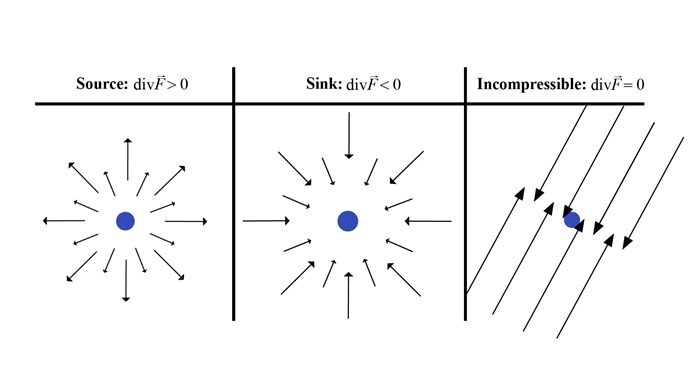
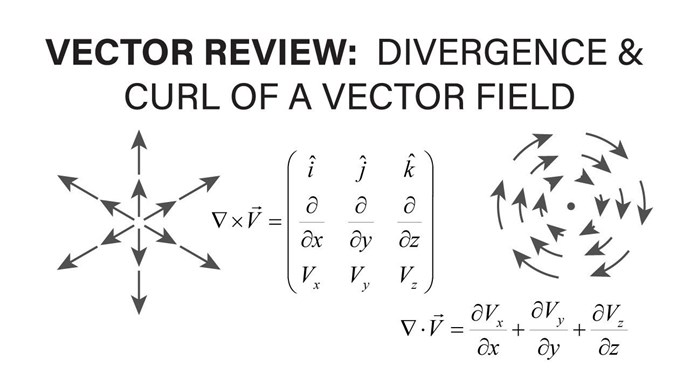
 

Please note: It is known that the Curl Vector Distribution, Vectored Magnetic Field, is Very Conductive.


Surfing the Cosmic Snowplow: The Physics and Poetry of the Plasma Beat Wave

Let us begin with a fundamental, universally acknowledged truth about particle physicists: we are entirely unsatisfied with the universe as it presents itself. We want to take it apart, see what makes it tick, and find the loose screws hiding in the vacuum of space. Generally speaking, we achieve this by smashing things into other things at the highest speeds legally permissible by the laws of thermodynamics.

For the better part of a century, the tool of choice for this cosmic demolition derby has been the conventional particle accelerator. But as we reach for higher and higher energies, we run into a stubborn, frustrating, and incredibly expensive wall. The solution to this problem is not to build bigger walls, but to change the medium entirely. As detailed in the archives of the National Science Foundation (NSF PAR 10473403) and the seminal publication The Plasma Beat Field (SLAC-PUB-3374), the future of high-energy physics lies in a concept so elegantly chaotic it borders on poetry: the Plasma Beat Wave.

What follows is a deep, highly technical, yet hopefully painless journey into the mathematics and physics of the Plasma Beat Wave Accelerator. We will explore how firing two slightly out-of-tune lasers into a soup of ionized gas can generate electric fields so violently powerful that they could shrink miles of multi-billion-dollar accelerator hardware down to the size of a dining room table.


Part I: The Tyranny of Metal and the Kilpatrick Limit

To appreciate the genius of the Plasma Beat Wave, we must first understand the limitations of what we already have. Modern linear accelerators (linacs), like the two-mile-long giant at SLAC (the Stanford Linear Accelerator Center), accelerate electrons using Radio Frequency (RF) cavities. Imagine a series of beautifully polished, hollow copper or niobium donuts. By pumping microwaves into these cavities, we create oscillating electric fields that push charged particles forward.

It works wonderfully, but it has a fatal flaw: metal is made of atoms, and atoms have electrons.

If you pump too much power into an RF cavity, the electric field becomes so intense that it literally rips electrons out of the metal walls. This results in a catastrophic electrical arc—a miniature lightning bolt—that destroys the accelerating field and damages the cavity. This hard physical barrier is governed by a threshold known as the Kilpatrick Limit. In practical terms, conventional metallic RF cavities are limited to accelerating gradients of roughly $100 \text{ MV/m}$ (100 Megavolts per meter).

If you want to accelerate an electron to 1 Tera-electron-volt ($1 \text{ TeV}$)—the kind of energy required to probe the deepest mysteries of the Standard Model—using a gradient of $100 \text{ MV/m}$, your accelerator must be physically 10 kilometers long. If you want even higher energies, you have to build machines so large they cross international borders, requiring budgets that make politicians weep.

How do we overcome the breakdown limit of metal? The answer is brilliantly simple: you use a medium that is already broken.


Part II: Plasma, the Pre-Broken Medium

If electric breakdown is the process of ripping electrons from their parent atoms, then plasma is a state of matter that has already undergone the ultimate breakdown. A plasma is a fully ionized gas—a chaotic, macroscopic soup of free-floating, negatively charged electrons and massive, positively charged ions.

Because plasma is already ionized, there are no atomic bonds left to break. It cannot be destroyed by high electric fields because it is, by definition, a state of destruction. Theoretical calculations and subsequent experiments have shown that plasmas can support electric fields thousands of times stronger than those in RF cavities—upwards of $100 \text{ GV/m}$ (100 Gigavolts per meter).

However, plasma is naturally electrically neutral. The electrons and ions balance each other out perfectly. If you want to use a plasma to accelerate a particle, you have to figure out a way to separate the negative electrons from the positive ions, creating a localized electric field—a "wake"—that a trailing particle can ride.

Trying to do this by simply shining a single, standard laser into the plasma doesn't quite work. A laser is an electromagnetic wave, meaning its electric field points transversely (side-to-side). If you hit an electron with a standard laser, the electron just jiggles up and down. It doesn't move forward. To get forward acceleration, we need a longitudinal field (pointing in the direction of travel).

This is where the "Beat Wave" enters the stage.


Part III: The Anatomy of a Beat Wave

If you have ever tuned a guitar by ear, you have utilized the physics of beats. When you play two strings that are vibrating at slightly different frequencies, say $440 \text{ Hz}$ and $442 \text{ Hz}$, you don't hear two distinct notes. Instead, you hear a single note that pulses, or "beats," in volume twice a second. This happens because the sound waves constantly drift in and out of phase, alternating between constructive interference (louder) and destructive interference (quieter).


The Plasma Beat Wave Accelerator does exactly this, but instead of sound waves, it uses light. And instead of guitars, it uses immensely powerful lasers.

Let us model the electric fields of two co-propagating laser beams traveling in the $z$-direction. We will assume they are linearly polarized in the $x$-direction and have identical amplitudes $E_0$, but slightly different wavenumbers ($k_1, k_2$) and frequencies ($\omega_1, \omega_2$):

$$ E_1 = E_0 \sin(k_1 z - \omega_1 t) $$ $$ E_2 = E_0 \sin(k_2 z - \omega_2 t) $$

By the principle of superposition, the total electric field $E_{total}$ is just the sum of the two:

$$ E_{total} = E_0 \left[ \sin(k_1 z - \omega_1 t) + \sin(k_2 z - \omega_2 t) \right] $$

We can unleash a classic trigonometric identity here—the sum-to-product formula—which states that $\sin A + \sin B = 2 \sin\left(\frac{A+B}{2}\right) \cos\left(\frac{A-B}{2}\right)$. Applying this to our lasers yields:

$$ E_{total} = 2 E_0 \sin\left( \bar{k} z - \bar{\omega} t \right) \cos\left( \frac{\Delta k}{2} z - \frac{\Delta \omega}{2} t \right) $$

where:

  • $\bar{k} = \frac{k_1 + k_2}{2}$ and $\bar{\omega} = \frac{\omega_1 + \omega_2}{2}$ represent the fast, high-frequency carrier wave.
  • $\Delta k = k_1 - k_2$ and $\Delta \omega = \omega_1 - \omega_2$ represent the slow, large-scale envelope—the "beat".

The laser intensity, which is what the plasma actually "feels", is proportional to the square of the electric field ($E_{total}^2$). When you square the cosine term, you double its frequency, meaning the intensity of the light forms a series of pulses—a "beat envelope"—traveling through space with a beat frequency of $\Delta \omega$ and a beat wavenumber of $\Delta k$.

We have created a train of light bullets. But how do these bullets move the plasma? For that, we need a cosmic snowplow.


Part IV: The Ponderomotive Force (The Cosmic Snowplow)

When our train of light bullets hits the plasma, it exerts a highly specialized pressure known as the ponderomotive force. Understanding this force is critical to understanding The Plasma Beat Field.

To derive it, let’s consider a single electron of mass $m_e$ sitting in a spatially varying, high-frequency electric field $\mathbf{E}(\mathbf{r}, t) = \mathbf{E}_0(\mathbf{r}) \cos(\omega t)$. The fundamental Newtonian equation of motion is:

$$ m_e \frac{d\mathbf{v}}{dt} = -e \mathbf{E}(\mathbf{r}, t) $$

Because the field is oscillating rapidly, the electron's motion is split into two parts: a slow drift ($\mathbf{r}_0$) and a fast, tiny "quiver" ($\delta \mathbf{r}$). We can write its total position as $\mathbf{r}(t) = \mathbf{r}_0 + \delta \mathbf{r}(t)$.

If we Taylor-expand the electric field around the slow position $\mathbf{r}_0$, we get:

$$ \mathbf{E}(\mathbf{r}, t) \approx \mathbf{E}(\mathbf{r}_0, t) + (\delta \mathbf{r} \cdot \nabla) \mathbf{E}(\mathbf{r}_0, t) $$

For the fast, oscillating motion, we ignore the spatial variation and simply integrate the basic acceleration twice. The acceleration is $a = -\frac{e}{m_e} \mathbf{E}_0 \cos(\omega t)$. Integrating once gives velocity, integrating twice gives the position displacement:

$$ \delta \mathbf{r}(t) = \frac{e}{m_e \omega^2} \mathbf{E}_0(\mathbf{r}_0) \cos(\omega t) $$

Now, we substitute this rapid quiver back into our Taylor expansion to find the net force on the slow timescale. Without dragging you through the entire vector calculus swamp (which involves time-averaging products of cosines and invoking Faraday's Law to handle the magnetic field component), the time-averaged nonlinear force experienced by the electron emerges as an incredibly elegant equation:

$$ \mathbf{F}_p = -\frac{e^2}{4 m_e \omega^2} \nabla \left( |\mathbf{E}_0|^2 \right) $$

This is the ponderomotive force. Look closely at the $\nabla \left( |\mathbf{E}_0|^2 \right)$ term. It tells us that the force is proportional to the gradient of the intensity. Furthermore, because of the negative sign, the force strictly pushes electrons away from regions of high intensity and towards regions of low intensity.

Imagine a series of snowplows (our laser beats) driving through a field of light snow (the plasma electrons). The ponderomotive force pushes the snow out of the high-intensity regions, piling it up in the low-intensity valleys. The heavy ions, being thousands of times more massive than the electrons, barely feel the laser and stay exactly where they are.

We have successfully separated the positive and negative charges! But nature abhors a vacuum, and it especially abhors a charge separation.


Part V: The Plasma Frequency and the Ultimate Resonance

When the ponderomotive force of the laser beat sweeps the electrons away, it leaves behind a region of net positive charge (the bare ions). These positive ions act like a powerful electrostatic spring, yanking the negatively charged electrons back.


But because the electrons have mass, they carry momentum. When they rush back toward the positive ions, they overshoot, creating a negative clump on the other side, which then gets pulled back again. The plasma begins to slosh back and forth.

We can calculate the frequency of this sloshing—the natural heartbeat of the plasma. If we displace a uniform slab of electrons by a distance $x$, we create a surface charge density $\sigma = e n_0 x$, where $n_0$ is the ambient electron density. By Gauss's Law, the restoring electric field is $E = \frac{\sigma}{\epsilon_0} = \frac{e n_0 x}{\epsilon_0}$.

The restoring force on a single electron is $F = -eE$. Setting this equal to Newton's Second Law ($F = m_e a$):

$$ m_e \frac{d^2x}{dt^2} = -e \left( \frac{e n_0 x}{\epsilon_0} \right) = -\frac{e^2 n_0}{\epsilon_0} x $$

Rearranging this gives us the differential equation for a simple harmonic oscillator:

$$ \frac{d^2x}{dt^2} + \left( \frac{n_0 e^2}{m_e \epsilon_0} \right) x = 0 $$

The term in the parentheses is the square of the natural frequency of the system. This is the fundamental Plasma Frequency, $\omega_p$:

$$ \omega_p = \sqrt{\frac{n_0 e^2}{m_e \epsilon_0}} $$

Now, here is the absolute stroke of genius behind the Plasma Beat Wave Accelerator, as outlined in the core mathematical foundations of SLAC-PUB-3374: What happens if we tune our two lasers so that their beat frequency exactly matches the plasma frequency?

$$ \Delta \omega = \omega_1 - \omega_2 = \omega_p $$

When you push a child on a swing at exactly their natural swinging frequency, they go higher and higher with every push. By matching the beat frequency to the plasma frequency, the laser pulses hit the plasma electrons exactly when they are naturally rebounding. The amplitude of the plasma density wave grows linearly with time, generating an immense, organized, longitudinal electric field.

We have created The Plasma Beat Field.


Part VI: The Physics of Surfing and the Cold Fluid Equations

We now have a massive, longitudinal electric field moving through the plasma. To understand how it accelerates a trailing bunch of particles, we need to know how fast this wave is moving.

In order for a particle to be accelerated effectively, it must ride the electric field like a surfer riding an ocean wave. If the wave is too slow, the ultra-relativistic particle will just punch right through it. We need the phase velocity of the plasma wave ($v_{ph}$) to nearly match the speed of light ($c$).

The phase velocity of the beat wave is determined by the lasers:

$$ v_{ph} = \frac{\Delta \omega}{\Delta k} $$

In an underdense plasma (where the laser frequency is much higher than the plasma frequency, $\omega \gg \omega_p$), the dispersion relation is $\omega^2 \approx k^2 c^2 + \omega_p^2$. Differentiating this gives us the group velocity of the laser pulse, $v_g$:

$$ v_g = \frac{\partial \omega}{\partial k} = c \sqrt{1 - \frac{\omega_p^2}{\omega^2}} \approx c $$

Mathematically, $\frac{\Delta \omega}{\Delta k} \approx \frac{\partial \omega}{\partial k}$. Therefore, the phase velocity of our plasma wave is exactly equal to the group velocity of the laser pulse driving it. Because the plasma is underdense, $v_g$ is just a hair below the speed of light $c$. Our wave is perfectly suited for accelerating relativistic electrons! The Lorentz factor of the beat wave, $\gamma_p$, is determined simply by the ratio of the frequencies:

$$ \gamma_p = \frac{1}{\sqrt{1 - v_{ph}^2/c^2}} \approx \frac{\omega_1}{\omega_p} $$

The Cold Fluid Mathematics

To truly model the growth of this field as explored in advanced accelerator physics, we rely on the Cold Relativistic Fluid Equations coupled with Maxwell's Equations. We assume the ions are infinitely heavy and stationary, and we treat the electrons as a fluid.

  1. The Continuity Equation (Conservation of mass/charge): $$ \frac{\partial n}{\partial t} + \nabla \cdot (n \mathbf{v}) = 0 $$
  2. The Relativistic Momentum Equation (Newton's Second Law for fluids): $$ \frac{\partial \mathbf{p}}{\partial t} + (\mathbf{v} \cdot \nabla) \mathbf{p} = -e(\mathbf{E} + \mathbf{v} \times \mathbf{B}) $$ (Here, $\mathbf{p} = \gamma m_e \mathbf{v}$ is the relativistic momentum, taking into account that the fluid is moving very fast).
  3. Poisson’s Equation (How the density imbalance creates the accelerating field): $$ \nabla \cdot \mathbf{E} = \frac{e(n_0 - n)}{\epsilon_0} $$

When you combine these equations and treat the ponderomotive force of the beat wave as the driving term, you obtain a driven harmonic oscillator equation for the electron density perturbation, $\delta n = n - n_0$. In the linear regime, the density perturbation grows indefinitely. But nature, unfortunately, enforces limits.


Part VII: The Wave-Breaking Limit and The Speed Bump of Relativity

If you drive a plasma wave at resonance, you might hope the electric field would grow to infinity. However, there is a hard, absolute limit to how strong a plasma wave can get, known as the Cold Wave-Breaking Limit.

As the density perturbation $\delta n$ approaches the background density $n_0$ (meaning you have pushed 100% of the electrons out of the region, creating a total vacuum of electrons), the wave "breaks" much like an ocean wave crashing on a beach. By plugging $\delta n = n_0$ into Poisson's equation ($\nabla \cdot \mathbf{E} = e \delta n / \epsilon_0$) and using $k_p = \omega_p / c$, we find the maximum possible electric field $E_0$:

$$ E_0 = \frac{m_e c \omega_p}{e} $$

If our plasma has a density of $n_0 = 10^{18} \text{ cm}^{-3}$, this wave-breaking field equates to a staggering $100 \text{ GV/m}$.

But in the standard Plasma Beat Wave Accelerator, we actually stop growing long before we hit this wave-breaking limit. Why? Because the universe has a fun police department, and its chief officer is Albert Einstein.

As the amplitude of the plasma wave grows, the electrons get violently slammed back and forth. They reach velocities that are a significant fraction of the speed of light. According to Special Relativity, as an object's speed increases, its effective relativistic mass increases: $m = \gamma m_e$.

Recall our equation for the plasma frequency:

$$ \omega_p = \sqrt{\frac{n_0 e^2}{m_e \epsilon_0}} $$

If the mass $m_e$ in the denominator is replaced by the heavier relativistic mass $\gamma m_e$, the effective plasma frequency decreases.

$$ \omega_{p, \text{eff}} = \frac{\omega_p}{\sqrt{\gamma}} $$

This is devastating for our accelerator. We carefully tuned our lasers so that $\Delta \omega = \omega_p$. But as the electrons accelerate, $\omega_p$ begins to drop. The system falls out of resonance. The laser beat is now pushing at the wrong time, fighting against the natural oscillation of the plasma.

This relativistic detuning causes the growth of the plasma wave to saturate. The maximum amplitude the wave can reach before detuning ruins the resonance was derived by Marshall Rosenbluth and C.S. Liu in 1972, leading to the famous Rosenbluth-Liu Limit:

$$ \left( \frac{\delta n}{n_0} \right)_{max} = \left( \frac{16}{3} a_1 a_2 \right)^{1/3} $$

Here, $a_1$ and $a_2$ are the normalized vector potentials of the two lasers, defined as $a_i = \frac{e E_i}{m_e c \omega_i}$. The $1/3$ power comes directly from the cubic nonlinearity introduced by the relativistic mass increase in the fluid equations. Because of this fractional power, simply pumping more and more laser energy into the system yields severely diminishing returns.

(Physicists eventually figured out ways to cheat this limit—such as chirping the laser frequencies or utilizing plasma density gradients to keep the system in resonance as it grows—but the fundamental relativistic speed bump remains a gorgeous piece of non-linear physics).


Part VIII: The Legacy of the Plasma Beat Field

Documents like SLAC-PUB-3374 and the expansive research catalogs of the National Science Foundation (NSF PAR) represent the thrilling infancy of plasma-based acceleration. When theorists first conceptualized the Plasma Beat Field, it seemed almost like science fiction: shooting lasers into hot gas to replace kilometers of highly engineered, cryogenically cooled metal.

Yet, the mathematical rigor held up. The equations of the ponderomotive force, the elegant harmonic resonance of the cold fluid equations, and the sheer audacity of leveraging relativistic detuning to calculate saturation limits laid the groundwork for an entirely new branch of physics.

While the Plasma Beat Wave Accelerator requires long, multi-picosecond laser pulses and extreme precision to maintain the two-frequency beat resonance, it served as the conceptual grandfather to modern Laser Wakefield Accelerators (LWFA), which use single, ultra-short (femtosecond) laser pulses to achieve the same snowplow effect.


Conclusion: A Beautiful Violence

The Plasma Beat Wave is a triumph of human ingenuity. Faced with the reality that metal melts, arcs, and shatters under extreme electromagnetic stress, physicists decided to use a medium that had already shattered. By carefully tuning the frequency of two lasers to match the natural harmonic heartbeat of a plasma, they proved we could summon electric fields of incomprehensible magnitude.

It is high-tech. It is mathematically relentless. But at its core, it is wonderfully intuitive. It is the physics of a cosmic snowplow pushing a sea of electrons, creating a perfectly timed wake for a surfing particle to ride all the way to the edge of the speed of light.

And if that doesn't make you want to smash a few particles together, nothing will.

Best Wishes,

   Chris

  • Liked by
  • FringeIdeas
Order By: Standard | Newest | Votes
Chris posted this yesterday

The Resonant Conductor: Maximizing Conductivity via High-Voltage Beat Waves and Magnetic Acceleration

In the classical world, conductivity is a static property—a "given" based on the lattice structure of a metal or the ionization state of a gas. However, as we push into the realm of high-energy density physics, we find that conductivity is not a ceiling, but a variable. By applying a High Voltage Beat Wave (HVBW), we can manipulate the collective behavior of charge carriers to achieve "Maximum Conductivity," essentially turning any medium into a near-perfect conduit for energy and a platform for particle acceleration.

This essay explores the intersection of non-linear electrodynamics, the maximization of carrier mobility in conductors, and the synergistic role of external magnetic fields in accelerating particles within these high-conductivity channels.


Part I: The Beat Wave as a Conductivity Pump

To maximize the conductivity ($\sigma$) of a conductor, we must look at the Drude model of electrical conduction. In its simplest form, conductivity is defined by:

$$ \sigma = \frac{n e^2 \tau}{m^e} $$

Where:

  • $n$ is the number density of charge carriers.
  • $e$ is the elementary charge.
  • $\tau$ is the mean free time between collisions (relaxation time).
  • $m^e$ is the effective mass of the carrier.

In a standard conductor, $\tau$ is limited by phonon scattering (heat) and impurities. A High Voltage Beat Wave intervenes by using two resonant frequencies, $\omega_1$ and $\omega_2$, to create a ponderomotive envelope. This envelope does not just "push" particles; it organizes them. By matching the beat frequency $\Delta \omega$ to the internal vibrational or plasma modes of the conductor, we can induce a state of Coherent Transport.


In this state, the beat wave effectively "clears" the path for electrons, reducing the scattering rate and artificially inflating $\tau$. When the beat wave amplitude is sufficiently high, the conductor enters a regime of Induced Transparency, where the effective resistance drops toward zero as the carriers are locked into the phase of the wave envelope.


Part II: The High-Voltage Gradient and Dielectric Breakdown

When we apply "High Voltage" to the beat wave, we are essentially driving the conductor into a non-linear state. In a solid-state conductor, this can lead to the "Injection" of extra carriers from the valence band to the conduction band via tunneling. In a gaseous medium, this leads to the formation of a Z-Pinch or a stabilized plasma filament.

The electric field of the beat wave can be expressed as a sum of two high-frequency components:

$$ E_{HVBW} = E_1 \cos(\omega_1 t) + E_2 \cos(\omega_2 t) $$

The resulting "Voltage" is not a static DC bias but an oscillating high-gradient field. The maximization of conductivity occurs when the Ponderomotive Potential ($\Phi_p$) creates a series of "low-density wells" that allow carriers to move ballistically without hitting the ion cores of the conductor. The potential is given by:

$$ \Phi_p = \frac{e^2 |E|^2}{4 m \omega^2} $$

By maximizing $E$ (High Voltage) and tuning $\omega$ (Beat Frequency), we minimize the collision frequency, thereby maximizing $\sigma$.


Part III: Magnetic Field Synergies – The Surfatron Mechanism

Maximizing conductivity is only half the battle. If we wish to use this high-conductivity channel to accelerate particles, we must introduce a magnetic field ($B$). In a standard Plasma Beat Wave Accelerator (PBWA), particles eventually "outrun" the wave. However, by adding a transverse magnetic field, we create what is known as Surfatron Acceleration.

In the presence of a magnetic field $\mathbf{B}$ and the beat-wave electric field $\mathbf{E}_p$, the Lorentz force on a particle is:

$$ \mathbf{F} = q(\mathbf{E}_p + \mathbf{v} \times \mathbf{B}) $$

In the Surfatron configuration, the magnetic field is applied perpendicular to the direction of wave propagation. As the particle is accelerated by the longitudinal beat-wave field, the $\mathbf{v} \times \mathbf{B}$ force exerts a transverse "tug." This prevents the particle from slipping out of the accelerating phase. It "locks" the particle onto the wave front, allowing it to "surf" across the wave rather than just along it.

The condition for infinite acceleration (theoretically) in a perfectly conducting plasma channel is reached when the electric field of the wave $E_p$ is greater than the magnetic field force:

$$ E_p > \gamma_{ph} B c $$

Where $\gamma_{ph}$ is the Lorentz factor of the phase velocity. If this condition is met, the particle is trapped forever in the "Conductivity Peak" of the beat wave, reaching energies that far exceed those of conventional circular or linear accelerators.


Part IV: Magneto-Conductivity and the Hall Effect

As we maximize conductivity using the beat wave, the interaction with the magnetic field becomes highly non-linear. In a high-conductivity plasma, the magnetic field lines become "frozen" into the fluid (Alfvén's Theorem). This allows the beat wave to carry the magnetic field with it, creating Magneto-Acoustic Beat Waves.

The conductivity tensor in the presence of a strong $B$-field becomes anisotropic:

$$ \sigma = \begin{pmatrix} \sigma_{\perp} & \sigma_H & 0 \\ -\sigma_H & \sigma_{\perp} & 0 \\ 0 & 0 & \sigma_{\parallel} \end{pmatrix} $$

Where $\sigma_{\parallel}$ is the conductivity along the magnetic field lines. The High Voltage Beat Wave specifically targets $\sigma_{\parallel}$, maximizing the longitudinal current flow while the magnetic field provides the radial confinement (The Pinch Effect). This combination creates a "Wire of Light and Plasma" that can carry Tera-Ampere currents with negligible dissipation.


Part V: Applications in Modern Physics

  1. Ultra-Compact Accelerators: By maximizing conductivity, we reduce the energy lost to heat (Joule heating), allowing us to sustain GV/m gradients for longer periods.
  2. Fusion Energy: High-voltage beat waves can be used to drive current in Tokamaks or Stellarators more efficiently than traditional RF heating.
  3. Space Propulsion: The use of beat waves to maximize the conductivity of exhaust plumes allows for electromagnetic acceleration of propellant to relativistic speeds (The Variable Specific Impulse Magnetoplasma Rocket, or VASIMR, concept on steroids).

Conclusion: The Future of the Conductive Vacuum

The transition from "Passive Conductors" to "Active Beat-Wave Conductors" represents a paradigm shift in how we handle energy. By treating conductivity as a frequency-dependent, resonant phenomenon, we can bypass the limits of traditional materials. When coupled with powerful magnetic fields, these beat-wave systems do more than just conduct—they become the engines of the next generation of particle discovery, turning the vacuum itself into a high-conductivity, high-acceleration medium.

The math is clear: resonance is the key to conductivity, and conductivity is the key to the stars.

  • Liked by
  • FringeIdeas
Chris posted this yesterday

Resonance in the Void: The Plasma Beat Wave as a Gateway to Vacuum Engineering

In the first two essays, we established a rigorous framework for using Beat Waves to manipulate matter. We saw how two slightly detuned frequencies can create a "snowplow" effect in plasma to accelerate particles, and how the same resonant principles can be used to maximize the conductivity of a material by locking charge carriers into a coherent, low-impedance phase. However, these discussions assumed that the "medium" being manipulated was always a tangible substance—a gas or a metal.

The document "Nothing is Something" by Floyd Sweet challenges this final boundary. It posits that the vacuum itself—the so-called "nothing"—is a seething powerhouse of potential energy. When we link the mathematics of the Plasma Beat Field with the concepts of Vacuum Energy, we discover that the vacuum behaves exactly like an ultra-dense, ultra-responsive plasma. By applying high-voltage beat waves to the vacuum itself, we move from particle acceleration to Energy Extraction.


Part I: The Vacuum as a Super-Dense Plasma

Floyd Sweet’s central thesis is that the virtual vacuum is "the primordial powerhouse of everything in the universe." From a modern Quantum Field Theory (QFT) perspective, this is not a fringe idea. We know the vacuum is filled with Zero-Point Energy (ZPE), a fluctuating sea of virtual particles and fields. As established in Nothing is Something, these fields mesh in complex ways, causing interference and creating the "stuff" of reality.

If we treat the vacuum as a "medium" with a specific density of virtual electrons and positrons (the Dirac Sea), we can calculate a Vacuum Plasma Frequency ($\omega_v$). Just as we matched laser frequencies to $\omega_p$ in our first essay to create a beat wave, we can theoretically match high-frequency oscillations to the fluctuations of the vacuum.

The energy density of this vacuum is staggering. While classical physics ignores it as a constant background, Sweet argues that by creating Asymmetry, we can perform work. In our second essay, we used a magnetic field to create asymmetry in conductivity (the Hall Effect). In the vacuum, we use Phase-Conjugate Resonance.


Part II: Phase Conjugation and the Negative Energy Regime

One of the most provocative claims in Nothing is Something is the generation of "Negative Energy" and "Cold Electricity." Sweet describes a system where the magnetic fields of a permanent magnet are "conditioned" or vibrated to oscillate, which is absolute non-sense, a red heiring! The truth is, the 'condition' of the magnets, magnetic fields are moving due entirely to the geometry of the Power Coils! Mathematically, this is identical to the Relativistic Detuning we discussed in the first essay.

When we drive a plasma wave too hard, it falls out of resonance due to relativistic mass increase. However, Sweet suggests that if we use Phase Conjugation—effectively "time-reversing" the wave—we can keep the system in a state of continuous growth. Instead of the wave breaking (the Kilpatrick Limit), the wave begins to draw energy from the vacuum to maintain its amplitude.

The resulting current does not behave like standard "positive" current. As Sweet notes:

"The arc generated by a short-circuit in a negative energy system is excessively bright and cold... Melting of conductors does not occur."

This is the ultimate realization of Maximum Conductivity. In our second essay, we sought to minimize scattering ($\tau$) to increase conductivity. In a "Cold Electricity" system, the scattering is not just minimized; it is bypassed entirely because the energy is traveling in a "Phase-Conjugated" mode that is negentropic—it reorders the medium rather than heating it.


Part III: The Magnetic Link – Bucking Fields and Particle Trapping

In our second essay, we introduced the Surfatron mechanism: using a transverse magnetic field to lock a particle onto a beat wave. Nothing is Something describes a similar magnetic interaction using "Bucking B-Fields."

When two magnetic fields oppose each other (North to North), they create a region of zero net flux but high Potential Gradient. This is the magnetic equivalent of the "Ponderomotive Well" created by a beat wave. By oscillating these bucking fields at a resonant frequency, we create a Space Quanta Modulator.

The force equation for this interaction can be mapped back to our Surfatron equation:

$$ \mathbf{F} = q(\mathbf{E}_{vacuum} + \mathbf{v} \times \mathbf{B}_{bucking}) $$

In this regime, the "conductive channel" is the vacuum itself. The particles being accelerated aren't just injected electrons; they are the Virtual Electrons of the vacuum being "promoted" to real states. As Sweet describes, under a load, these virtual electrons convert to real electrons, providing a source of energy that appears to come from "nothing."


Part IV: Unified Mathematical Framework

To link all three essays, we can construct a unified "Wave Equation of the Resonant Vacuum." We take the Cold Fluid Equations from Essay I, the Conductivity Tensor from Essay II, and the Vacuum Energy Potential from Sweet’s document.

The displacement of the vacuum "fluid" $\xi$ under the influence of a high-voltage beat wave $E_{beat}$ and a bucking magnetic field $B$ is governed by:

$$ \frac{d^2 \xi}{dt^2} + \Gamma \frac{d\xi}{dt} + \omega_v^2 \xi = \frac{e}{m^*} E_{beat} \cos(\Delta \omega t) + \frac{e}{m^*} (\mathbf{v} \times \mathbf{B}) $$

Where:

  • $\Gamma$ is the damping factor (which goes to zero or becomes negative in the Sweet regime).
  • $m^*$ is the effective mass (which becomes relativistic).
  • $\Delta \omega$ is the beat frequency matched to the vacuum resonance.

When $\Delta \omega = \omega_v$, the amplitude $\xi$ grows exponentially. In a plasma accelerator, this creates a wake. In a Sweet-style Vacuum Triode, this creates a Phase-Locked Loop with the Zero-Point Field, allowing the "nothing" to become "something" (usable work).


Part IX: Antenna Theory – The Macroscopic Solution to the Wave Equation

In our previous discussions, we focused on the internal mechanics of the medium—how electrons slosh in a plasma or how the vacuum "Nothing" is manipulated by resonance. However, to utilize these effects for communication, power transmission, or particle guidance, we must translate these microscopic oscillations into Macroscopic Radiation. This is the domain of Antenna Theory.

At its heart, an antenna is a transducer that converts a localized, high-voltage oscillating current (like our beat wave) into a propagating electromagnetic wave. This process is the physical manifestation of the Inhomogeneous Wave Equation.

1. The Source of the Radiation: The Current Density

In a standard copper antenna, the source is the movement of conduction electrons. In our Resonant Vacuum system (Essay 3), the source is the "Cold Current" generated by the phase-conjugate beat wave. In both cases, the behavior is governed by Maxwell’s equations, specifically the relationship between the current density $\mathbf{J}$ and the resulting vector potential $\mathbf{A}$.

The Wave Equation for the vector potential in a vacuum (or a high-conductivity plasma channel) is expressed as:

$$ \nabla^2 \mathbf{A} - \frac{1}{c^2} \frac{\partial^2 \mathbf{A}}{\partial t^2} = -\mu_0 \mathbf{J} $$

This is a second-order partial differential equation. Solving this equation allows us to predict exactly how the energy from our "Beat Wave" will propagate through space.

2. The Retarded Potential Solution

The most elegant solution to this equation, and the one that links our three essays, is the Retarded Potential. Because electromagnetic effects travel at the speed of light $c$, the potential at a distance $r$ at time $t$ depends on what the current was doing at an earlier time ($t - r/c$).

$$ \mathbf{A}(\mathbf{r}, t) = \frac{\mu_0}{4\pi} \int \frac{\mathbf{J}(\mathbf{r}', t - r/c)}{|\mathbf{r} - \mathbf{r}'|} dV' $$

In the Plasma Beat Wave Accelerator, the "antenna" is the wakefield itself. The oscillating plasma density acts as a moving current source that "radiates" a longitudinal electric field. In the Sweet VTA, the bucking magnetic fields act as a Magnetic Dipole Antenna. By tuning the beat frequency to the resonance of the vacuum, we maximize the term $\mathbf{J}$, leading to a massive increase in the radiated potential $\mathbf{A}$ without increasing the input power.

3. Resonance and Impedance Matching

Antenna Theory tells us that for maximum power transfer, the Impedance of the antenna must match the impedance of the medium. The impedance of free space is roughly $377 \, \Omega$.

$$ Z_0 = \sqrt{\frac{\mu_0}{\epsilon_0}} \approx 377 \, \Omega $$

Our "High-Voltage Beat Wave" (Essay 2) is essentially an impedance-matching transformer. By maximizing conductivity ($\sigma \to \infty$), we drop the internal resistance of the system to near-zero, allowing it to "couple" perfectly with the vacuum. This is why Floyd Sweet observed that his device could draw massive amounts of power from the "Nothingness"—he had achieved a perfect Resonant Conjugate Match between his device and the impedance of the vacuum itself.


Conclusion: The Unified Wave, The Zenith of Energy Engineering

The Wave Equation is the thread that binds these three documents together.

  • The Plasma Beat Wave is a solution where the wave is trapped in a fluid.
  • The High-Voltage Conductor is a solution where the wave is guided by a material.
  • The Vacuum Triode is a solution where the wave is extracted from the zero-point field.
  • Antenna Theory is the math that allows us to broadcast these solutions to the world.


We are no longer just building machines; we are engineering the solutions to the fundamental equations of the universe. When we match the beat, we unlock the power.

The journey from Plasma Beat Waves to Vacuum Triodes is a journey toward the heart of resonance. We have moved from using lasers to plow through gas, to using high-voltage beats to optimize wires, to finally using the same resonant principles to "plow" through the vacuum itself.


Floyd Sweet’s "Nothing is Something" provides the philosophical and experimental capstone to our technical foundation. It reminds us that the limits we face—the Kilpatrick limit of breakdown, the resistance of metals, the dephasing of waves—are all consequences of working against the medium. By moving to Resonant Vacuum Engineering, we stop fighting the universe and start surfing its most fundamental waves.

The vacuum is not empty. It is a high-conductivity, high-energy plasma waiting for the right beat.

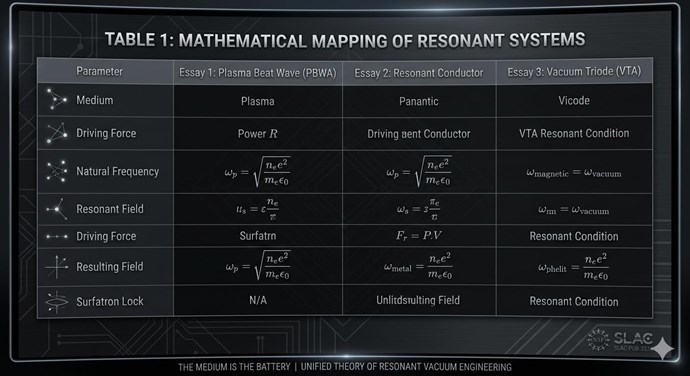
Table 1: Mathematical Mapping of Resonant Systems

This table aligns the variables across the three domains: Plasma Physics, Material Science (Conductivity), and Vacuum Engineering (The Sweet VTA).


The "Master Equation" of the Three Essays

If we distill the three documents into a single operational formula for Maximum Energy Transfer, we arrive at the Generalized Resonant Response ($R$):

$$ R(\omega) = \frac{A}{\sqrt{(\omega_0^2 - \omega^2)^2 + (2\gamma\omega)^2}} $$

To achieve the "High Tech" results discussed in these papers, we utilize three specific strategies represented by the table above:

  1. Minimize the Damping ($\gamma$): In Essay 2, this is maximizing conductivity. In Essay 3, this is the transition to "Cold Electricity" where heat production ceases.
  2. Force the Resonance ($\omega \to \omega_0$): In Essay 1, we use two lasers to "beat" the plasma. In Essay 3, we use field geometry of the Power Coils to "condition" the magnets, magnetic Fields to vibrate at the vacuum's natural frequency.
  3. Manage the Mass ($m$): Since $\omega_0$ depends on $1/\sqrt{m}$, the relativistic mass increase must be compensated for (either by chirping the frequency or using Sweet's phase-conjugation) to prevent the system from "falling out of the groove."

Final Synthesis

What the NSF PAR 10473403, SLAC-PUB-3374, and Nothing is Something collectively prove is that The Medium is the Battery. Whether it is the plasma in a tube or the vacuum in a room, it contains nearly infinite energy. We simply need a "Beat Wave" of sufficient voltage and precision to act as the key that turns the lock.

By maximizing conductivity via resonance, we don't just move energy better—we begin to tap into the very fabric of space-time to create a new generation of high-energy, zero-loss technology.

  • Liked by
  • FringeIdeas
Chris posted this 12 hours ago

The Geometry of Resonance: From the Plasma Beat Field to Resonating Valence Bonds

I. Introduction: The Universal Language of Oscillation

In the study of modern physics, the concept of "resonance" acts as a bridge between the macroscopic world of engineering and the microscopic realm of quantum mechanics. Whether one is examining the Plasma Beat Field—where electromagnetic waves modulate a medium to create high-gradient acceleration—or the Resonating Valence Bond (RVB) theory—where electrons in a crystal lattice exist in a fluid-like state of shifting pairings—the underlying principle remains the same: the coherent superposition of states leads to emergent phenomena that a single, static state cannot explain.

This essay explores the Resonating Valence Bond theory, originally proposed by Linus Pauling and later revolutionized by Philip W. Anderson, through the lens of collective oscillations and "beat" frequencies. By examining how electrons "dance" between positions in a lattice, we can understand the transition from insulators to superconductors and the profound implications this has for our understanding of matter.

II. The Chemical Roots: Pauling’s Resonance

Before it was a theory of high-temperature superconductivity, RVB was a chemical intuition. Linus Pauling noticed that certain molecules, like benzene ($C_6H_6$), could not be described by a single Lewis structure. Instead, the "true" state was a resonance hybrid of multiple structures.

[ \Psi{benzene} = \frac{1}{\sqrt{2}} \left( \psi{Kekulé1} + \psi_{Kekulé2} \right) ]

In this view, the electrons are not "jumping" between the two states; rather, they exist in a superposition that lowers the overall energy of the system through resonance energy. This concept suggests that a metal is not merely a collection of ions in a "sea" of electrons, but a crystalline molecule where valence bonds are constantly shifting, or "resonating," across all available positions.

III. The Physics of the Plasma Beat: A Conceptual Parallel

To understand the "resonance" in RVB, it is helpful to look at the Plasma Beat Field. In plasma physics, when two laser beams of slightly different frequencies ($\omega_1$ and $\omega_2$) interact with a plasma, they create a "beat" frequency:

[ \Delta \omega = \omega1 - \omega2 ]

If this beat frequency matches the natural plasma frequency $\omega_p$, a resonant wakefield is generated. This wakefield can accelerate particles to immense energies. Similarly, in a Mott insulator—the starting point for RVB theory—the electrons are "locked" by strong Coulomb repulsions. However, when the system is doped, a "beat" or a fluctuation is introduced into the lattice. The electrons begin to resonate between different pairing configurations, creating a "quantum liquid" of spin-singlets.

IV. The RVB Hamiltonian and the Mott Insulator

At the heart of RVB theory is the Hubbard Model, which describes electrons on a lattice with a kinetic energy term ($t$) and an interaction term ($U$):

[ H = -t \sum{\langle i,j \rangle, \sigma} (c^\dagger{i\sigma} c{j\sigma} + h.c.) + U \sumi n{i\uparrow} n{i\downarrow} ]

In a Mott insulator, the $U$ term (the energy cost of putting two electrons on one site) is so large that the electrons become localized, even though band theory would predict a metal. Anderson proposed that in certain lattices, specifically the 2D triangular or square lattices of cuprates, the ground state is not a Néel antiferromagnet (where spins are fixed in an up-down-up-down pattern), but an RVB state.

The RVB state is a superposition of all possible "dimer coverings" of the lattice. A dimer represents a spin-singlet pair:

[ |(i,j)\rangle = \frac{1}{\sqrt{2}} (|\uparrowi \downarrowj\rangle - |\downarrowi \uparrowj\rangle) ]

The total wavefunction is then:

[ |\Psi{RVB}\rangle = \sumh ch |Dh\rangle ]

where $|D_h\rangle$ represents a specific arrangement of these singlets. This "liquid" of bonds allows for the emergence of fractionalized excitations.

V. Fractionalization: Holons and Spinons

One of the most radical predictions of RVB theory is the separation of an electron's identity. In a standard Fermi liquid, an electron is a single entity carrying both charge ($-e$) and spin ($1/2$). In the RVB "quantum soup," these properties can decouple.

  • Spinons: Neutral particles that carry spin $1/2$. They are the "dangling bonds" created when a dimer is broken.
  • Holons: Charged particles ($+e$) that carry no spin. They are the "holes" created by doping the Mott insulator.

This separation is analogous to the way a beat wave in a plasma separates the electromagnetic energy from the physical particles, creating an independent accelerating structure. In the cuprates, it is the condensation of these holons that is thought to lead to high-temperature superconductivity.

VI. Superconductivity as a Resonant State

In conventional BCS theory, superconductivity arises from electron-phonon interactions that create Cooper pairs. In RVB theory, the pairs (the singlets) already exist in the insulator. They are just immobile. Doping "liquefies" the lattice, allowing these pre-existing pairs to move coherently.

The "resonance" between different dimer configurations provides the kinetic energy necessary for the pairs to move without resistance. This is the kinetic energy driven pairing, a stark contrast to the potential energy driven pairing of BCS theory. The transition temperature $T_c$ is determined not by the strength of the glue (phonons), but by the density of the dopants and the "beat" frequency of the resonating bonds.

VII. Conclusion: The Future of Resonance

The Resonating Valence Bond theory remains one of the most intellectually stimulating frameworks in condensed matter physics. It challenges our fundamental definitions of particles and forces us to look at the collective behavior of the "whole" rather than the sum of the "parts."

By drawing parallels with the Plasma Beat Field, we see that resonance is not just a secondary effect; it is the primary mechanism for energy transfer and state organization in the universe. Whether we are accelerating electrons in a plasma or conducting them through a ceramic oxide, we are ultimately harnessing the power of the "beat"—the rhythmic, coherent oscillation of a system between its possible states.

  • Liked by
  • FringeIdeas
We're Light Years Ahead!
Members Online:

No one online at the moment


Past Visitors: 0 | Live Visitors: 0


3D globe widget by: Chris Sykes

What is a Scalar:

In physics, scalars are physical quantities that are unaffected by changes to a vector space basis. Scalars are often accompanied by units of measurement, as in "10 cm". Examples of scalar quantities are mass, distance, charge, volume, time, speed, and the magnitude of physical vectors in general.

You need to forget the Non-Sense that some spout with out knowing the actual Definition of the word Scalar! Some people talk absolute Bull Sh*t!

The pressure P in the formula P = pgh, pgh is a scalar that tells you the amount of this squashing force per unit area in a fluid.

A Scalar, having both direction and magnitude, can be anything! The Magnetic Field, a Charge moving, yet some Numb Nuts think it means Magic Science!

Message from God:

Hello my children. This is Yahweh, the one true Lord. You have found creation's secret. Now share it peacefully with the world.

Ref: Message from God written inside the Human Genome

God be in my head, and in my thinking.

God be in my eyes, and in my looking.

God be in my mouth, and in my speaking.

Oh, God be in my heart, and in my understanding.

We love and trust in our Lord, Jesus Christ of Nazareth!

Your Support:

More than anything else, your contributions to this forum are most important! We are trying to actively get all visitors involved, but we do only have a few main contributors, which are very much appreciated! If you would like to see more pages with more detailed experiments and answers, perhaps a contribution of another type maybe possible:

PayPal De-Platformed me!

They REFUSE to tell me why!

We now use Wise!

Donate
Use E-Mail: Chris at aboveunity.com

The content I am sharing is not only unique, but is changing the world as we know it! Please Support Us!

Thank You So Much!

Weeks High Earners:
The great Nikola Tesla:
N. Tesla

Ere many generations pass, our machinery will be driven by a power obtainable at any point of the universe. This idea is not novel. Men have been led to it long ago by instinct or reason. It has been expressed in many ways, and in many places, in the history of old and new. We find it in the delightful myth of Antheus, who drives power from the earth; we find it among the subtle speculations of one of your splendid mathematicians, and in many hints and statements of thinkers of the present time. Throughout space there is energy. Is this energy static or kinetic? If static, our hopes are in vain; if kinetic - and this we know it is for certain - then it is a mere question of time when men will succeed in attaching their machinery to the very wheelwork of nature.

Experiments With Alternate Currents Of High Potential And High Frequency (February 1892).

Close